


Anita's Blog -- Honoring The Original
Updated: Dec 25, 2025
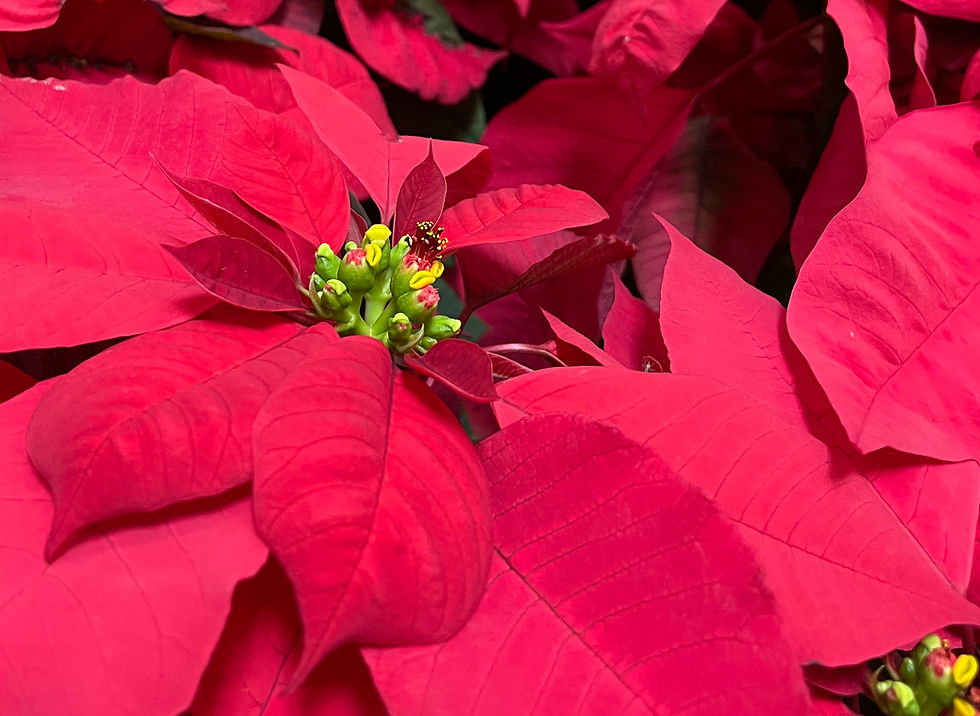
It was called cuetlaxochitl, Euphorbia pulcherrimo, long before specimens were collected by Joel Roberts Poinsett while he was the first U.S. Minister to Mexico.
This was pointed out to me by a friend and fellow Texas Master Naturalist who avidly supports the transformation movement taking place in Mexico – which includes the restitution of indigenous cultural beliefs and values, including the nomenclature of plants.
Cuetlaxochitl (pronounced kwet-la-sho-she) is the original Nahuatl (Aztec) name for the plant known as the poinsettia. For the Aztecs, cuetlaxochitl symbolizes purity, sacrifice and rebirth.
The species’ name, pulcherrimo, means most beautiful.
Cuetlaxochitl is indigenous to the Pacific slope of Mexico and Central America, growing wild in dry tropical forests as a large, woody shrub or small tree, up to 10 to 12 feet tall.
In the wild, in regions of Mexico and Central America, hummingbirds feed on the sugar-rich nectar of the yellow flowers of Euphorbia pulcherrima, significantly aiding in the plant’s pollination.
Long story short, about Mr. Poinsett, if you don’t already know, in 1828, he sent specimens of Euphorbia pulcherrimo to his estate in Greenville, South Carolina, where they were propagated and distributed to his horticulturally minded friends and botanical gardens throughout the United States. The name of the plant was changed to honor him. The commercialization and extensive breeding of Euphorbia pulcherrima have since led to more than 300 varieties.
But this is not about Poinsett or poinsettias. It’s about the Family.
As the botanical nomenclature of cuetlaxochitl, Euphorbia pulcherrimo, tells, the plant is a spurge: Euphorbia (Spurges family) which is a very large genus with more than 2,000 species.
Euphorbia flowers are unique in that they rarely have petals. In fact, the flowers are tiny and massed together in a cluster called a cyathium -- a cup-like cluster of modified leaves enclosing a female flower and several male flowers to resemble a single flower. This feature is present in every species of the genus Euphorbia, but nowhere else in the plant kingdom.
While not as vibrant as cuetlaxochitl, the Rio Grande Valley has its own beautiful euphorbias; they are tiny and often overlooked by humans but certainly not ignored by bees, butterflies, flies, wasps and ants.
Following is a gallery of Rio Grande Valley valuable Euphorbias. The first four are recent additions to my personal photo gallery of spurges.
Asthma plant, Euphorbia hirta, historically was used to treat respiratory ailments, hence the name; it also treated dysentery and dengue fever, according to the National Institutes of Health. Modern science, of course, offers other curatives. E. hirta can bloom during all months. The leaves are distinct, with a grayer hue and thicker look; they have a bristly texture and tiny-toothed edges.

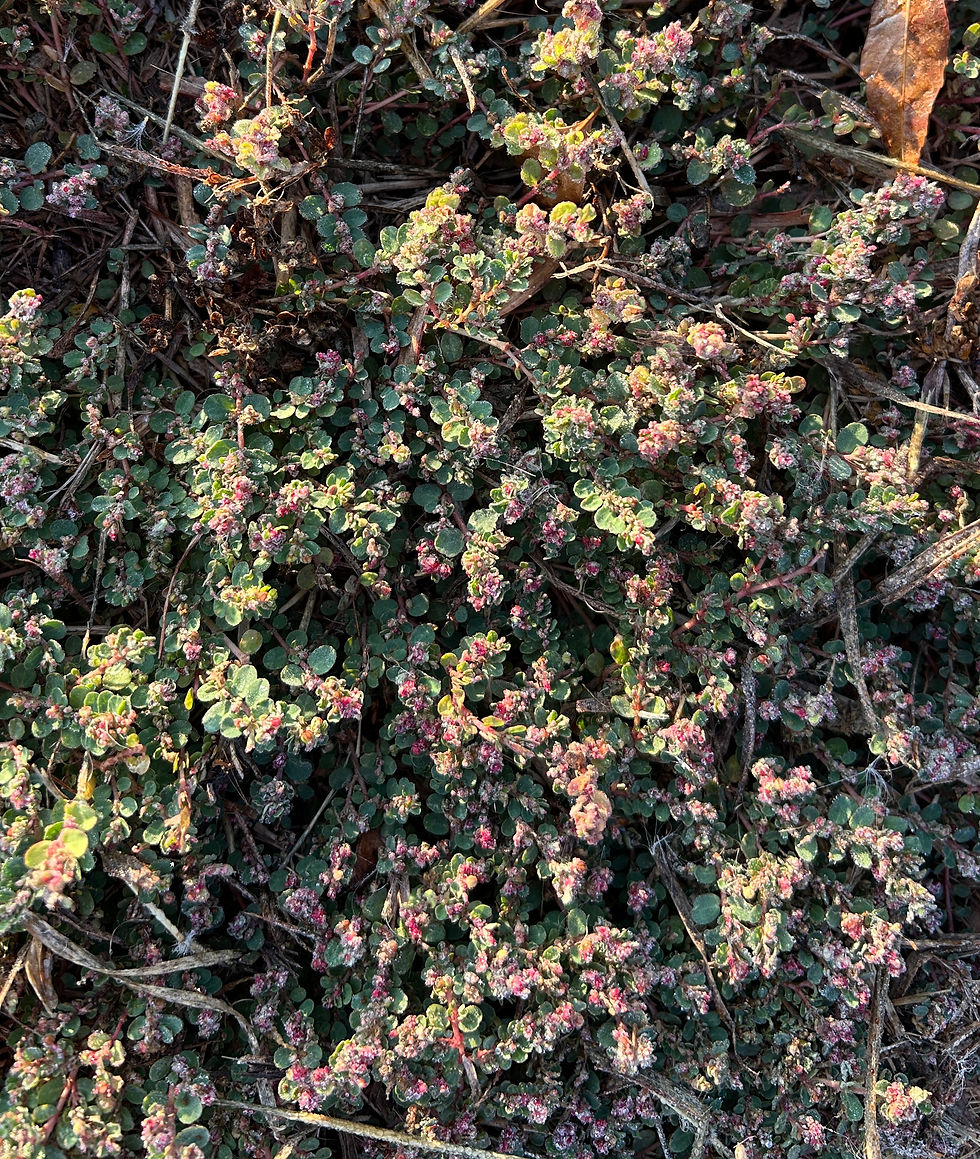
Caliche sandmat, Euphorbia velleriflora. Sandmats grow close to the ground, prostrate, forming mats. E. velleriflora is drought tolerant and likes dry, disturbed areas, especially in caliche soils in South Texas. Blooms are tiny, maroon-purple and white. Generally, summer-blooming.
Green Poinsettia, Euphorbia dentata, AKA toothed spurge. Leaves have toothed edges; plant can grow to two to three feet tall, spreads easily by seed (one site said prolific). The center will produce pale yellow flowers offset by silver/white coloration of the leaves at the stem.

Nodding spurge, Euphorbia nutans, AKA Eyebane beware, it’s treacherous: it is commonly called eyebane because its thick, milky, white sap, which is present in all parts of the plant, is severely irritating if it comes in contact with the eyes, (potential for temporary or permanent blindness). E. nutans is often confused with graceful spurge.
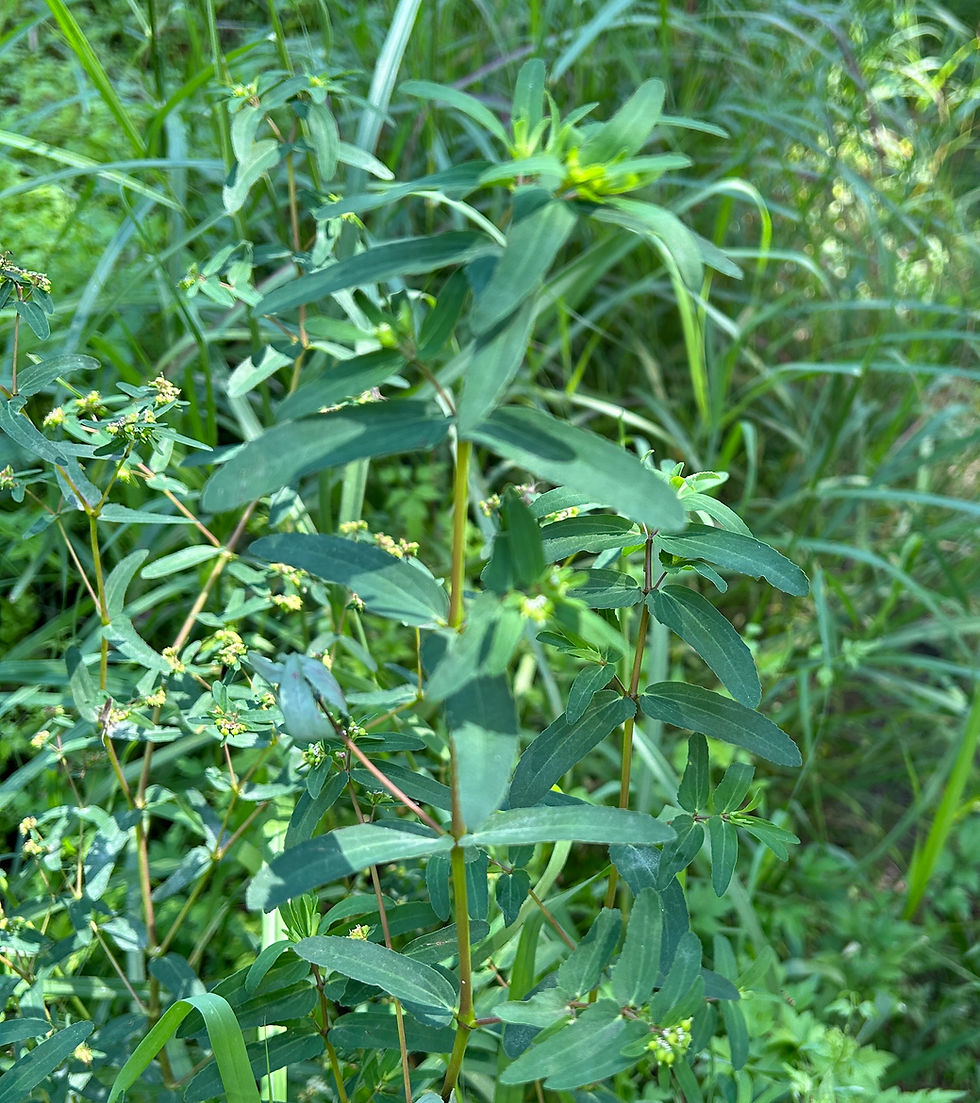
Graceful spurge, Euphorbia hypericifolia. My favorite. I think it is beautiful when in full bloom. It is delicate looking, yet sturdy. It can bloom anytime and grow as tall as two feet in height. It is sometimes commonly called spotted spurge, so, too, is E. nutans.

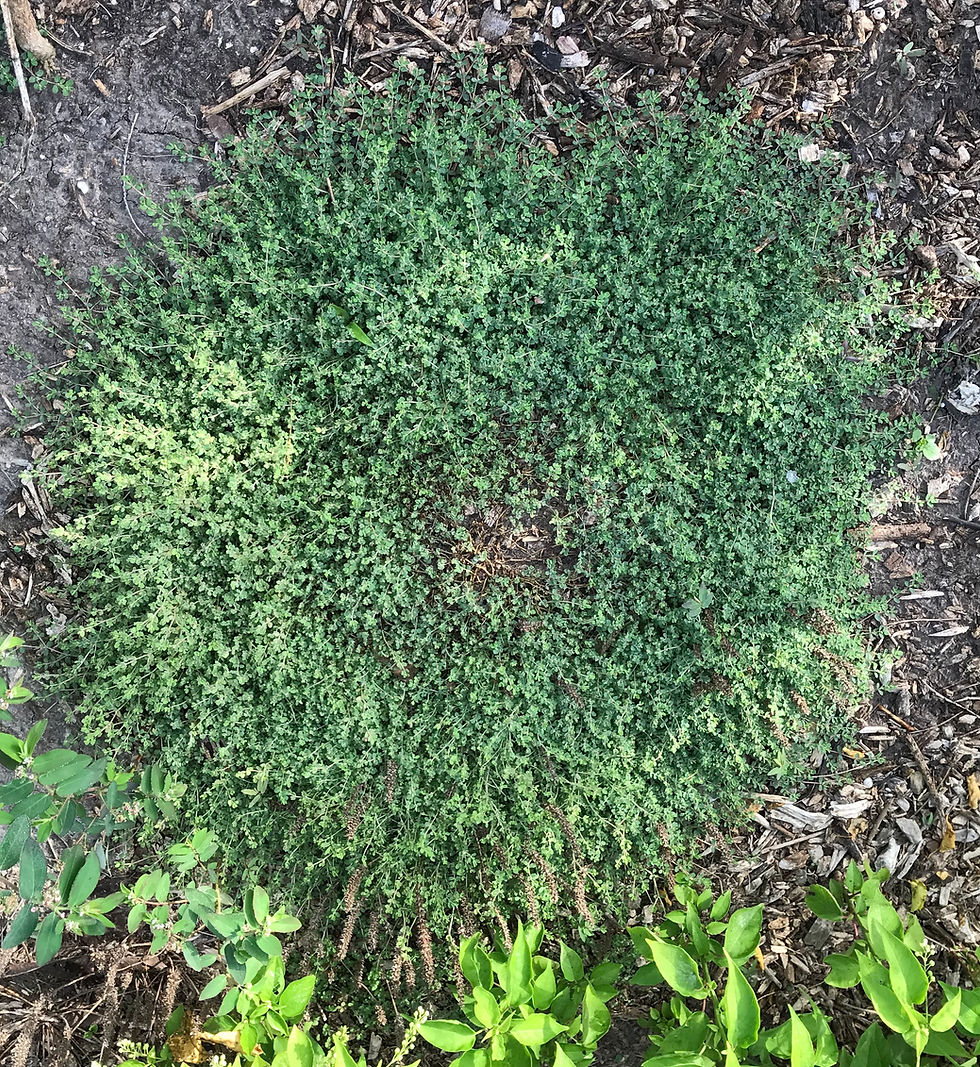
Matted Sandmat, Euphorbia serpens, is quite an impressive plant. When left on its own, it seemed to clear the soil of everything while it developed into a lovely circular carpet more than three feet in diameter. AKA creeping spurge (serpens is Latin for creeping or snake-like). This sandmat is different from other prostrate spurges, like prostrate sandman, Euphorbia prostrata, because it roots at the nodes of the stems where they touch the ground – which is how it can quickly form such a dense mat.
Prostrate Sandmat, Euphorbia prostrata, AKA prostrate spurge. This also forms mats, like matted sandmat, but its leaves are less round in shape, and the stems are hairy and often purple. The leaves are the best clue to distinguish this species from E. serpens.

Painted Leaf spurge, Euphorbia cyathophora, is noted for its vibrant, red-tipped upper leaves and inconspicuous green flowers. It is a valuable native plant for pollinators and is a host plant for the El sphinx moth. Mourning doves eat the seeds.

Painted Spurge, Euphorbia heterophylla, AKA Wild Poinsettia, and recently highlighted in the McAllen Monitor, has a good many common names, including painted euphorbia, painted spurge, painted leaf. Don’t get confused, key on the scientific names of Euphorbias.

Euphorbia cyathophora and Euphorbia heterophylla are similar and both are often referred to with the same common names.
Many of the above spurges mostly bloom spring through fall and into the winter. Whether you are lucky enough to notice their wee flowers, do note that most are annual plants and can produce thousands of seeds per plant. Some people experience skin rashes from contact with the toxic sticky plant sap of Euphorbias.
- 30 -


