


What the sand dunes hold
Published August 7, 2026, in the McAllen Monitor
Story and photos by Anita Westervelt
A trip to the beach is usually about sand, shells and surf, but behind all that are the sand dunes – an often-ignored habitat rife with life, the age-old dance of predator and prey and wilder than you can imagine.
The main duty of a sand dune is to absorb the initial brunt of monster waves and surge during severe storms and hurricanes to protect the Texas mainland. They don’t do it with sand alone.
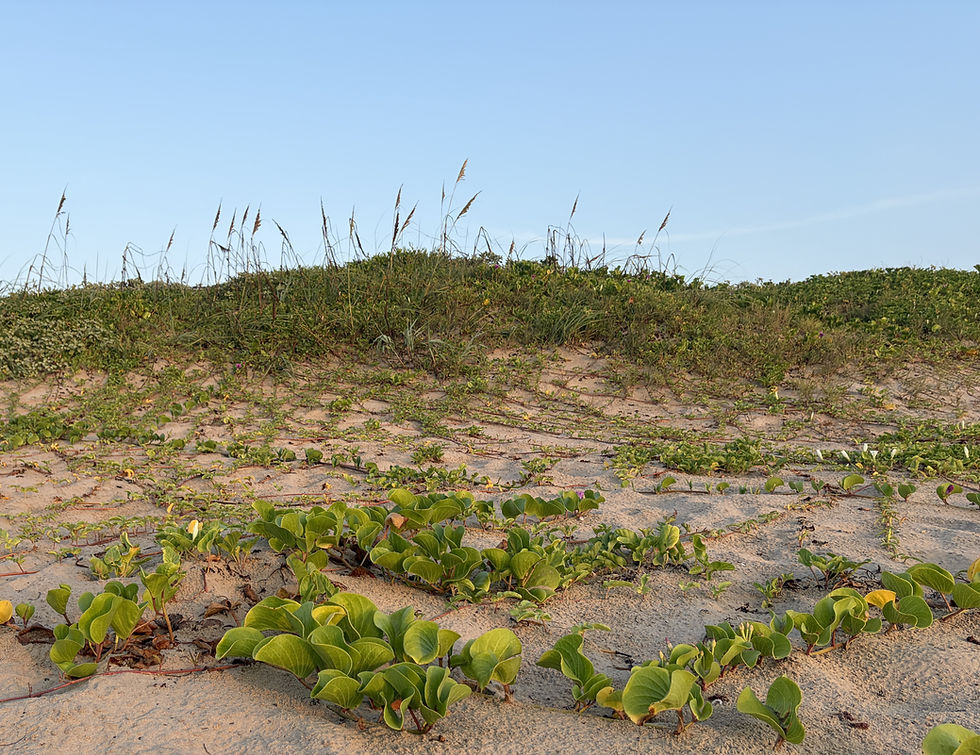
Plants are an integral part of the protection plan. Especially important are deep rooted systems that can handle shifting sand and salt spray, like sea oats to anchor the sand. Beach morning glories, with their vining, wandering ways, help stabilize dunes and allow other plants to gain purchase in the sand to reinforce the overall structure. But that’s not all.
Below, from left, A ripening sea oats head and beach morning glory vines and flowers. (Photos by Anita Westervelt)
Sand dunes also support an amazing array of wildlife.
During the day, sea oats dominate the dune’s skyline. Close in, insects, sparrows, red-winged black birds and small mammals eat the nutrient-rich seeds and foliage. Birds glean insects from the seed heads.
Beach morning glory flowers attract hummingbirds and other pollinators; their vines harbor bees, grasshoppers, flies, beetles, wasps, butterflies and moths, all prey for lizards and insectivorous birds.
Rattlesnakes and other snakes hide among the flora of the dunes and hunt rodents, lizards and large insects. Ground squirrels eat plant seeds, green vegetation, seed pods and prairie clover. Crested caracara and hawks eat lizards, snakes, small rodents and ground squirrels.

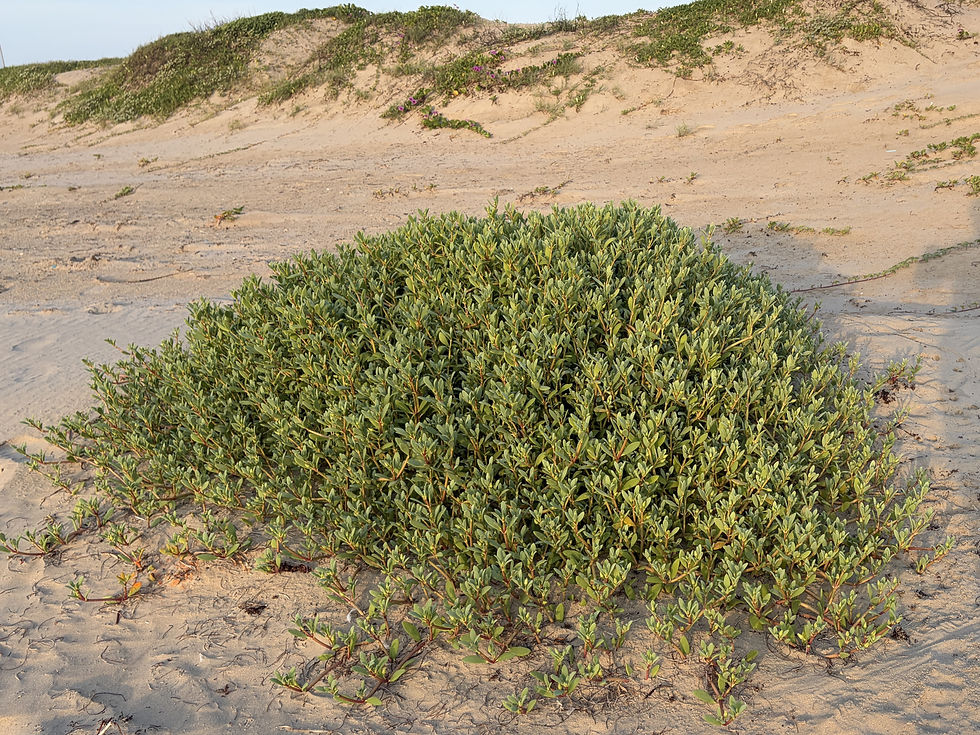
Huge bunches of sea purslane hide purslane sawfly larvae, weevils, and aphids, prey to ants and lizards. Keeled earless lizards eat insects and spiders. Ground skinks eat small beetles, ants, termites, roaches, spiders and mites and other invertebrates, like pill bugs and millipedes.
At night, nocturnal rodents feed on plant and dune grass seeds, as do ground beetles and night-flying insects. In turn, bats eat night-flying insects.
Black-tailed jackrabbits eat dune plants, beach grass and cactus. Coyotes, bobcats and hawks eat jackrabbits.
Coyotes stay hidden in thick dune vegetation during the day and head to the beach at night.
They are opportunistic hunters and scavengers; they eat rodents, rabbits, insects, snakes, dead fish washed ashore, and garbage left on the beach. Mostly coyotes stick to the northern stretches of the island’s dunes.
Ghost crabs are fun to look for at dusk. During the day, they hide underground in tunnels; their entrance holes can be seen in the dunes. They look like golf-ball-sized round holes. A fresh dug hole may have tiny sand pyramids around the rim. Ghost crabs can run at speeds up to 10 miles per hour. They are opportunistic omnivores and feed on insects, detritus, decaying seaweed, washed-up dead fish and beached jellyfish. They crack open small coquina clams in the wrack line.
White-tailed deer are active around sunrise and right before sunset, keeping mostly to the undeveloped northern sweeps; they forage among the grasses, eating stems, leaves and flowers of coastal plants and black mangrove seed pods that wash up on the sand.
- 30 -


