


Anita’s Blog – Rascal Dart
Rascal Dart conjures up an image of a little second grade boy who drifts into the classroom from a holler in Tennessee, the youngest of a clan’s cousins and first to be allowed to attend school in the1950s; a lot is riding on the quiet little fella.
Ok, Rascal Dart isn’t a real person, it’s a moth with an interesting name: Rascal Dart, Agrotis malefida. Three Rascal Dart moth photographs below. (Photos by Anita Westervelt)
Rascal Dart has cousins. Subterranean Dart, Feltia subterranea, which makes me think of Bob Dylan, who penned and sang, “Subterranean Homesick Blues” in 1965, during the Social Consciousness era. (Three Subterranean Dart moth photographs below. (Photos by Anita Westervelt)
Creaky Dart, hemieuxoa rudens, (no photo) is another cousin that could be found in southern Texas. All sorts of stories could be created around that name, but I won’t.
As fascinating as their names are, Dart is a broad common name applied to hundreds of members of the massive Noctuidae Family of moths, famous for their quick, darting flight patterns, according to Wikipedia.
Fun names aside, the simple fact is, they are Cutworm moths; the adults feed on nectar. They are not harmful. BUT they are responsible for laying the eggs that hatch into destructive caterpillars. Cutworm moths are also known as owlet or miller moths. Their larvae are notorious agricultural and garden pests. They chew stems just above or below soil level, causing seedlings to topple, “cutting” them down, hence the moniker. The subterranean cutworms remain entirely underground, feeding directly on the plant’s root systems on more than 61 hosts plants of economic importance.
Enough educational info. What this is really about:
Today is the last day to document taxa for the iNaturalist.org International Day for Biodiversity project that began May 15 and ends tonight at midnight, May 31, 2026.
Check it out – you have ‘til midnight — join our iNaturalist project
“Every species you find and share contributes to a global picture of life on Earth, putting the IDB 2026 theme of "Acting locally for global impact" into action.
I took the theme to heart: “acting locally” and kept my observations to our property.
Without much overlap, I documented 511 observations during the 17-day event.
I had an interesting first find this morning: an Orange Passiflora Flea Beetle, Parchicola tibialis. There were three, on leaves of my stinking passionflower, Passiflora foetida. It is a leaf beetle, with enlarged hind legs that allow them to jump like fleas – “they can inflict significant shot-hole damage on leaves and stems,” according to iNaturalist. Shortly after reading that, I went back and removed them. They are tiny. Like, pinhead small. They are not easy to squash between your fingers, hard shell, like a flea. Only four other observations have been documented in the Lower Rio Grande Valley on iNaturalist to date.

Check out the map of all the countries participating:
To date: 415,280 Observations; 41,388 species, 6,067 observers
I downloaded the field camera. The Bobcat made an appearance within the BioBlitz dates, as did a raccoon, opossum and an armadillo. I will reposition the night camera, seems the Bobcat got rather close.
Here are my counts, categorized oddly
207 moths. A Tersa Sphinx appeared this morning for the count.

4 badly photographed spiders, and one big Hogna antelucana in the house that posed nicely for a photograph.
1 Say’s Armored Harvestman
8 mushrooms/fungi
50 Beetles including two of my favorites, Saltmarsh Tiger Beetle and Upland Metallic Tiger Beetle
9 bugs (leaf beetles) an attractive Deeply-punctate Cryptocephalus, Cryptocephalus cribripennis; and a Crytocephalus fulguratus, equally as attractive; Genus Metachrona; Symphylus caribbeanus; Pigweed Flea Beetle; Prosapia simulans; Tamaulipan Pricklyash Leaf Beetle; Twin-Shield Leaf Beetle; Grape Colaspis causes sporadic damage to corn crops, not grapes; ubiquitous Western striped Cucumber Beetle; New-to-me Brick and Black Anomoea, Anomoea rufifrons;

70 plants
6 cockroaches: Pale-bordered Field, Australian, Bolls Sandroach, Surinam, Bilunate and Asian
10 butterflies, including a beautiful Southern Dogface
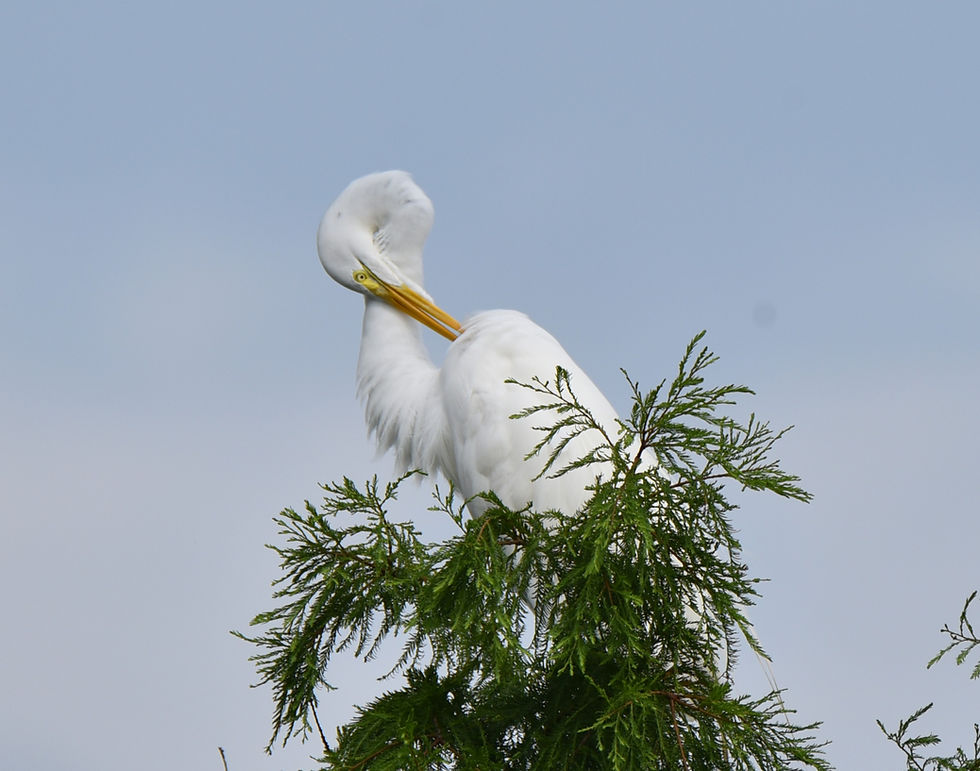
32 bird species, Buff-bellied hummingbird, an American Barn Owl and a great white egret grooming itself at the top of a tree Montezuma Cypress, Taxodium mucronatum tree (intro photo at the top of the story)


6 flies, including an Ins celeris and Leucophenga varia that feeds on mushrooms

19 Insects, like an Oblong-winged katydid
2 Snails
5 Wasps
6 Damselflies, including an Orange Bluet
1 snake, Rough Greensnake

1 Gulf Coast toad
3 pond sliders
A squirrel
1 American Alligator – three visits in the 17-day period
1 Eastern Cottontail
5 Bees: my favorite, the noisy Ptiloglossa mexicana and a new-to-me: Tepaned Long-horned Bee


1 Bee Fly, the good looking Poecilanthrax lucifer, Bombylildae Family

7 ants – including a Hairy Panther Ant AKA Texas Bullet Ant
1 Little Mesquite cicada


