


Anita’s Blog – Get Ready! Texas Pollinator BioBlitz 2026

Texas Parks & Wildlife Department’s
2026 Pollinator BioBlitz – Planting for Pollinators
October 16 to November 1
Bats, bees, hummingbirds, butterflies, moths, wasps, flies and beetles – the eight groups of animals that Texas Parks and Wildlife Department recognizes as essential pollinators.
It’s the time of year when the Texas Parks & Wildlife Department looks to Texans, Winter Texans and visitors to observe and document pollinator sightings.
Texas Parks & Wildlife Department continually promote information about and ways to help pollinators. This year they are specifically urging us to help Texas pollinators by planting native plants.
As an organization, none of us Texas Master Naturalists are shy about loading our outdoor spaces with native plants.
This year TPWD’s are unveiling something new to help us help the pollinators with region-specific plants:
Wild Thumb App: Texas Parks and Wildlife Foundation’s free Wild Thumb app has a map of local nurseries that carry native plants, and the app can also identify the right plants for your garden according to your location, sun exposure, and other helpful filters.
In addition, TPWD offer two other tools to help choose the right plants for the right region:
Native Plant Society of Texas Database: Find native plants that are readily available and best adapted to your area.
Lady Bird Johnson Wildflower Center Tool: Explore regional plant lists designed to attract pollinators.
If you don’t have time to check out those sources just yet, I've tried to simplify it. I texted fellow chapter members, at the far reaches of two of our chapter’s counties – Cameron and Hidalgo, to ask what they’ve noticed in the past as the busiest plants for nectar and pollen in their own yard or the parks where they volunteer.
Some of our native plants bloom only seasonally, and so many more bloom spring into winter.
One absolute butterfly nectar plant that begins blooming in the late fall, is hands down, the most remarkable native plant for attracting butterflies in the Rio Grande Valley:
It is crucita, also called fall-blooming mist flower, Siam weed and blue mistflower, the scientific name is Chromolaena odorata.

The following are favored nectar and pollinator plants chapter members observed in their specific areas:
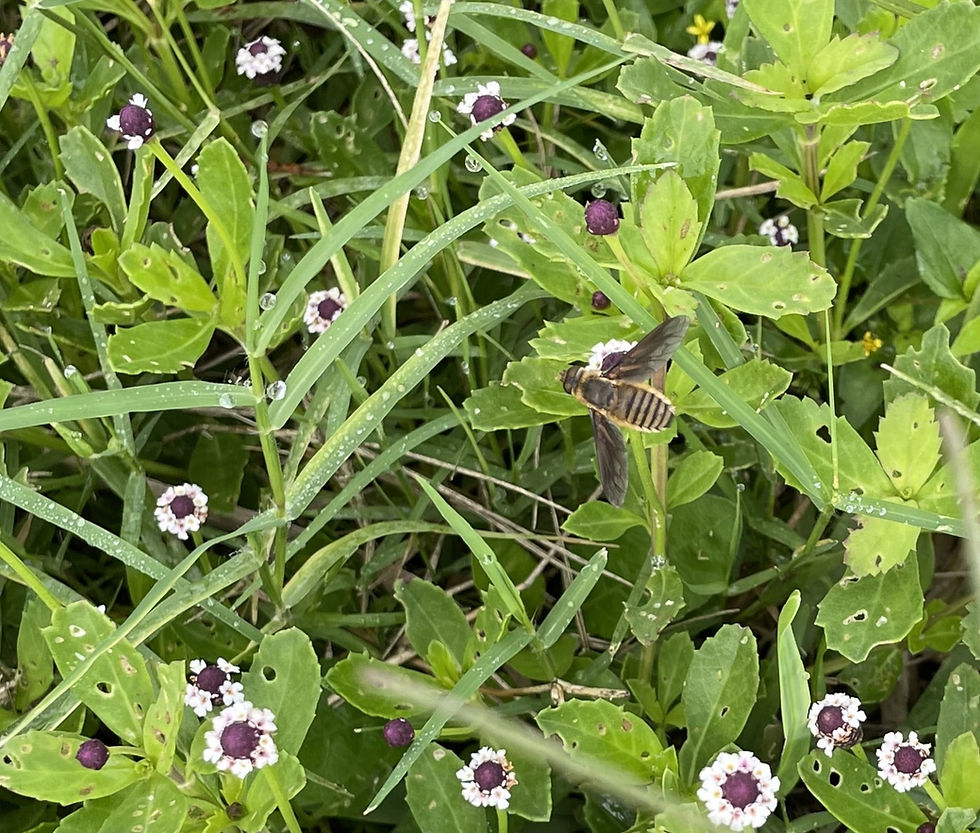
Elizabeth Eddy, educator and the designer and energy behind the B.L. Gray Junior High Tiny Forest project in Mission, said crucita in the fall. For nectar and pollen, frog fruit ground cover, Phyla nodiflora, attracted lots of checkerspot butterflies and tiny native bees nearly year-round.
Longtime volunteer tram driver and guide at Bentsen-Rio Grande Valley State Park in Mission, River Rivera said crucita for butterfly nectar. She noticed one year specifically, Texas Persimmon, Diospyros texana, really attracted bees.
Past chapter president Robert Hernandez, native plant enthusiast and Alamo resident, said crucita, certainly, for butterflies and bush croton, Croton fruticulosus, and whitebrush, Aloysia gratissima, for bees.

Laura Brush, former naturalist educator at Edinburg Scenic Wetlands & World Birding Center, currently Store Manager at the McAllen Wild Birds Unlimited, said during summer, shrubby blue sage, Salvia ballotiflora, and frogfruit got the most attention and Seaside goldenrod, Solidago sempervirens, for the bees in the fall.

Chapter Webmaster and spider enthusiast Joseph Connors, in McAllen, observed crucita, especially in November for butterflies. Skeletonleaf goldeneye, Viguiera stenoloba, was popular with butterflies, spiders, flies and mantis and Barbados cherry, Malpighia glabra, for attracting bees. Goldenrod, Solidago species, also attracted bees, beetles and other insects and fiddlewood, Citharexylum berlandieri, attracted a variety of insects.


Rachael Freyman Brown, Associate Professor of Art at South Texas College and native vine enthusiast, volunteers at Weslaco’s Frontera Audubon Society. She noted that butterflies were scarce this summer because it was so dry although a Malachite butterfly hung around near a blooming yaupon holly shrub, Ilex vomitoria, earlier in the year. She also observed anacua trees, Ehretia anacua, were busy with insects.
My picks from the eastern side of Cameron County for attracting butterflies with fall blooming nectar plants are crucita and its cousin betony-leaf or Padre Island mistflower, Conoclinium betonicifolium, and Mexican winged crown-beard, also called frostweed, Verbesina microptera. Another plant that attracts butterflies and other insects and blooms during all seasons, is scorpion tail, Heliotropium angiospermum. For bees, flies and wasps, seaside goldenrod takes the prize.

From left: Sickle-wing Skipper, Fiery Skipper and a Ligated Furrow Bee on Frostweed. (Photos by Anita Westervelt)


To feed butterflies, bees and other pollinators in the winter, plant pink mint, Stachys drummondii, a cold weather prolific-blooming nectar plant. Now is the time of year to plant native trees, shrubs and cold-weather plants.

The glory with planting native plants is that once established (which is easy to do) native plants are nearly maintenance free as well as drought and heat tolerant.
Here is a link to our chapter website list of local native plant growers.
- 30 -


