


Anita’s Blog – Dune Flora – Native or Not?

With a couple of changes to the 2026 City Nature Challenge, specifically, native plants had to have arrived on their own and not be tended by humans, I thought it would be a piece of cake at the beach for finding acceptable observations.
Early morning at Isla Blanca Park on South Padre Island, the dunes were alive with colorful blooms. I was greeted by all my old dune friends: healthy and abundant zizotes milkweed, Indian blankets, sea ox-eye, beach morning glory, beach bean, beach evening-primrose, beach crotons, cow pen daisies and sunflowers.
Much of the vegetation adjacent to the parking areas was low to the ground with small flowers on leafy branches that wended their way through the grasses. They were not as familiar to me as my old friends that populate the coastal strand and upper dunes. I was surprised to find, after I began researching them, the plants were native alright – to somewhere else. A couple could have invasive potential.
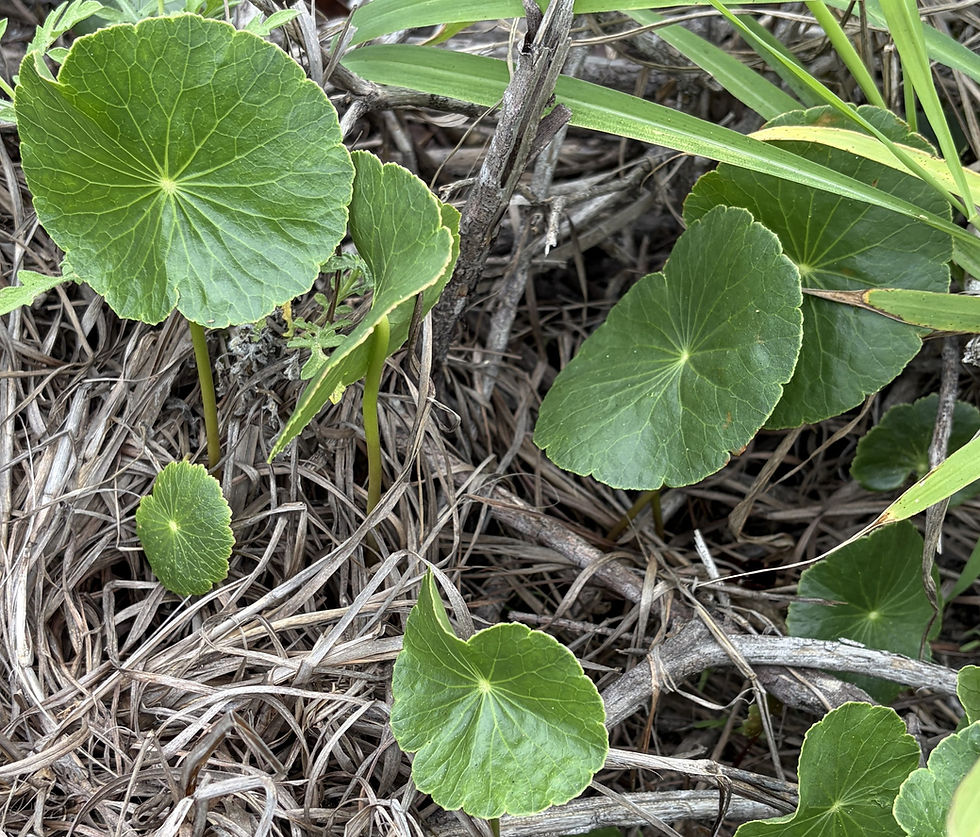
Largeleaf pennywort, Hydrocotyle bonariensis. If a leaf can be happy-looking, this is it with its five-inch-in-diameter, cookie-cutter-like round, scalloped-edged leaves and starburst radiating from a glowing center. The species is naturalized in the southeastern United States. It is primarily native to coastal areas, but of South America, Central America, Mexico and the Caribbean; not Texas. It is a fast-growing perennial, which arranges itself in dense mats about six inches in height in wet, sandy, coastal habitats. It is highly useful in stabilizing coastal dunes because of its expansive underground root system – which may be important in its native habitat and possibly exhibit invasive attributes out of its natural range. On the useful side, its small white flower clusters provide nectar, and the plant is a larval host for buckeye butterflies. Rabbits and other small mammals feed on the leaves and stems.
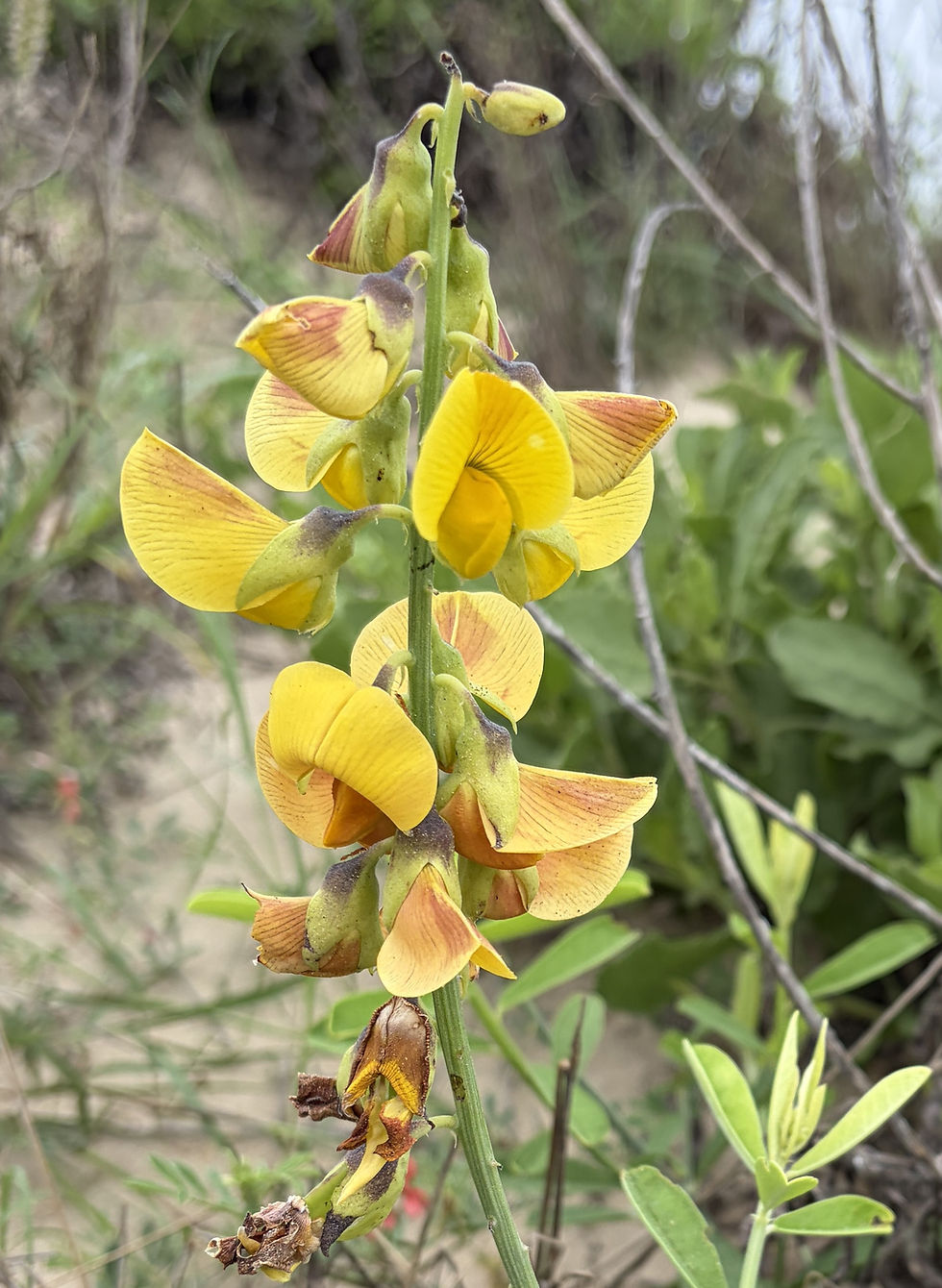
Rattleweed, Crotalaria retusa. I was elated to discover a rattlepod! There’s just nothing like the intricate bloom of a legume flower. I’d not come across a rattleweed plant for nearly seven years, after a stray had shot up in the Runyon Garden at Harlingen’s Hugh Ramsey Nature Park. Alas, it is not native to any part of the United States and worse, is considered a dangerous, noxious weed, toxic to livestock and humans. More bad news, it competes with native habitats. Its origins are tropical Africa, Asia and Australia. While the beautiful legume is whiling away it’s time on our southern beach, it is a host plant to common buckeye butterflies, painted lady, tiger and crow butterflies, the dogbane tiger moth, milkweed tussock moth and the unexpected cycnia moth. Valley native plants also play host to those insects.
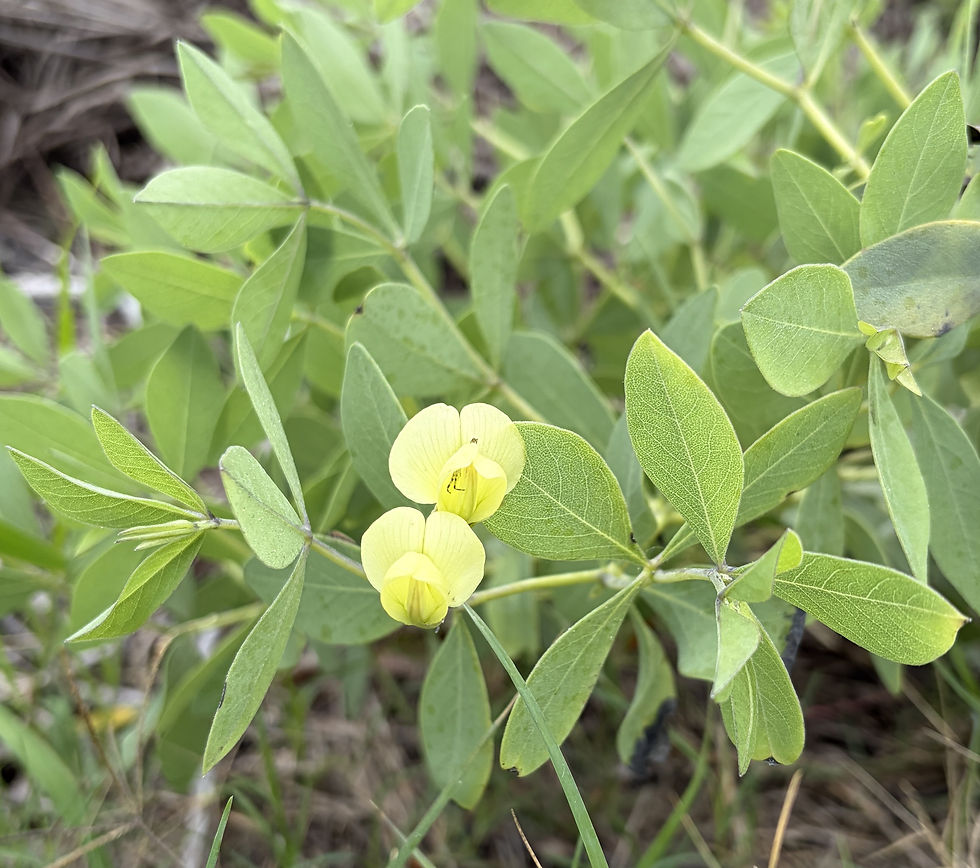
Cream wild-Indigo, Baptisia leucophaea. A low-growing, bushy perennial. Host to wild indigo duskywing and clouded sulphur butterflies. It is an important early nectar source for bees. It’s native to north central and eastern Texas but not native to the Rio Grande Valley. The Baptisia species also are useful as host plants for the attractive genista broom and io moths.
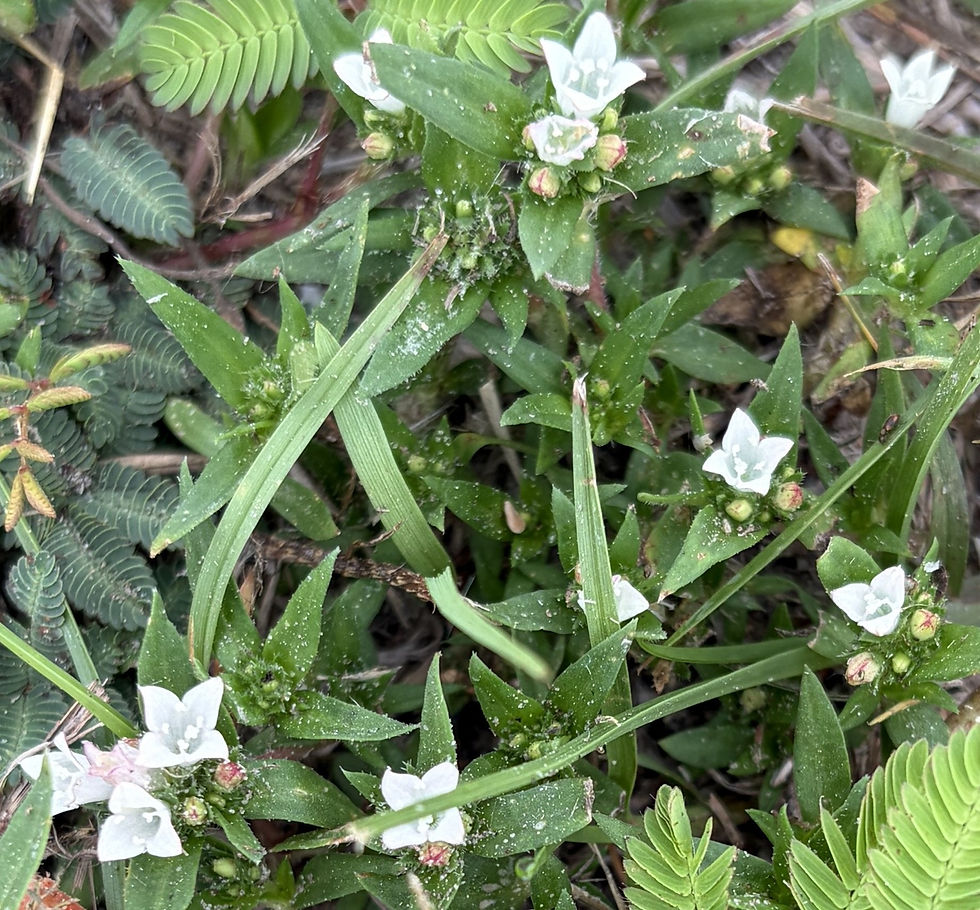
Prairie Mexican clover, Richardia triocca. Rubiaceae (madder) family. Naturalized in the Southern United States. It is native to tropical South America. An annual prostrate, mat-forming groundcover, good in sandy soils. It is useful to bees, butterflies and other beneficial insects for pollen and nectar; ground-foraging birds eat the seeds.

Green carpetweed, Mollugo verticillata. Not native, but it’s here – in every state in the United States except Utah, Alaska and Hawaii. It is an annual plant from Tropical America and is often considered an invasive weed. It is a fast-growing, opportunistic plant that can quickly overtake a landscape – also known as devil’s grip – which doesn’t sound good. There is some benefit, it attracts bees and flies for pollination. It is a high seed producer; birds and small mammals eat the seeds.
Better Beach Buddies:

Cloth-of-gold, Physaria gracilis, AKA spreading bladderpod, is at home on sandy soils. It is in the Brassicaceae family (Mustard family). A sprawling annual with small yellow flowers. Native to central and south-central Texas and surrounding states. Useful to pollinators.

Roundleaf scurfpea, Pediomelum rhombifolium. Yes, native to South Central Texas; host to jaguar flower moth; provides nectar for wasps, bees and butterflies. A perennial legume with trailing stems. It thrives in sandy soil and is a prolific seed producer; songbirds eat the seeds. Helpful in shoreline restoration by stabilizing soil in dunes and beaches. Good for pollinators.

Gomphrena weed, Gopmhrena serrata. Native to Texas and a lot of other states, generally the southeastern states and south through Central America and beyond. AKA prostrate globe amaranth. It’s a great plant for pollinators, nectar for bees, butterflies and moths. Prostrate perennial that can be useful as a xeriscape ground cover.
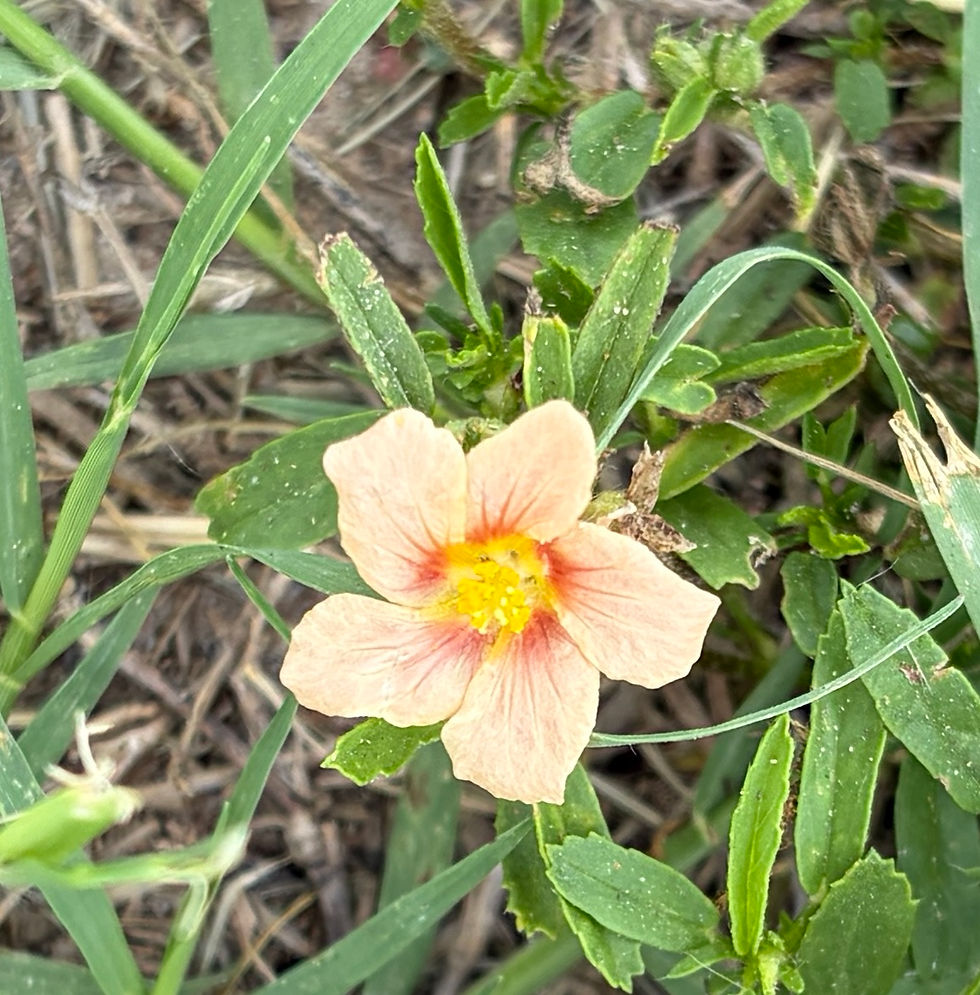
Bracted fanpetals, Sida ciliaris. Native to tropical and subtropical Americas, including Texas and Florida. It is a perennial groundcover in the mallow family, and larval host to tropical checkered skipper butterflies and other skipper and hairstreak butterflies. It is an essential nectar source for numerous pollinators, including moths, because of its long bloom time into December. It also is a host plant for looper moths in the Rio Grande Valley.
- 30 -


