


Anita’s Blog – Hooray for Plantain

Chuck Norris was an awesome actor. Not only because he portrayed an honorable Texas icon: the Texas Ranger, but because he lived life well.
I believe Chuck Norris was a naturalist. He was a legendary martial artist, a discipline deeply in tune with nature. Subtle titbits about the Texas habitat and respect for nature and the critters who call it home were peppered throughout the episodes of his television show, “Walker, Texas Ranger.”
One episode really sticks out in my mind. If I hadn’t already loved plantain, a favorite plant from my childhood, I would have held it in high regard after a seemingly unintentional endorsement from the star of the show.
The leaves of plantain have anti-inflammatory properties. I know this because our hero, Cordell Walker, had suffered a dastardly knife wound during a fight and was left to die; the bad guy rode off. Walker quickly regained consciousness, bravely plucked plantain leaves from the Texas landscape, chewed the leaves to release their mucilage and then applied the poultice to the stab wound to prevent infection. He was instantly healed. He shape-shifted (another of his redeeming qualities) to an eagle and went on to save the day.
Historically, that type of topical remedy has been documented, not for shapeshifting, mind you, but for treating all types of minor wounds. A versatile medicinal herb, redseed plantain is known for its anti-inflammatory, antimicrobial, and wound-healing properties. The leaves contain allantoin, which promotes skin healing.

Plantain leaves can be crushed into a poultice to treat skin conditions, minor cuts and scrapes, insect stings and bites, allergic rashes, itchy skin, burns and fire ant bites. It is known for its ability to draw out infections, boils and splinters and prevent bacterial growth in infected wounds.
Redseed plantain, Plantago rhodosperma, belongs to the Plantaginaceae family, a group of plants with ancient roots that have been used for food and medicine for thousands of years.
While the word ancient may be a subjective term, redseed plantain is indigenous to the United States, specifically throughout the Great Plains, the Southwest, Texas and Mexico. It is a species that has been part of our ecosystem long before European colonization.
Other common name spellings are red-seeded plantain and red seed plantain. Go by the scientific name, Plantago rhodosperma.
This stalwart plant generally gets only a casual glance, many think it is a weed, but it deserves respect; when you see one pushing its way through the ground or a crack in a sidewalk, give it a nod and recognize it as a valued member of our Texas habitat. It is found across all ten vegetative areas of Texas.
There are 13 species of plantain recognized in Texas. Redseed plantain is the most common plantain native in the Rio Grande Valley. It is unrelated to the banana-like plant also called plantain.
A cool season annual, redseed plantain first develops a basal rosette of hairy leaves in midwinter in the Rio Grande Valley. It has a slender taproot. A hairy flower spike soon begins shooting up; it can grow as tall as 14 inches. From March to June, numerous small flowers bloom around the stalks that emerge from the rosette.
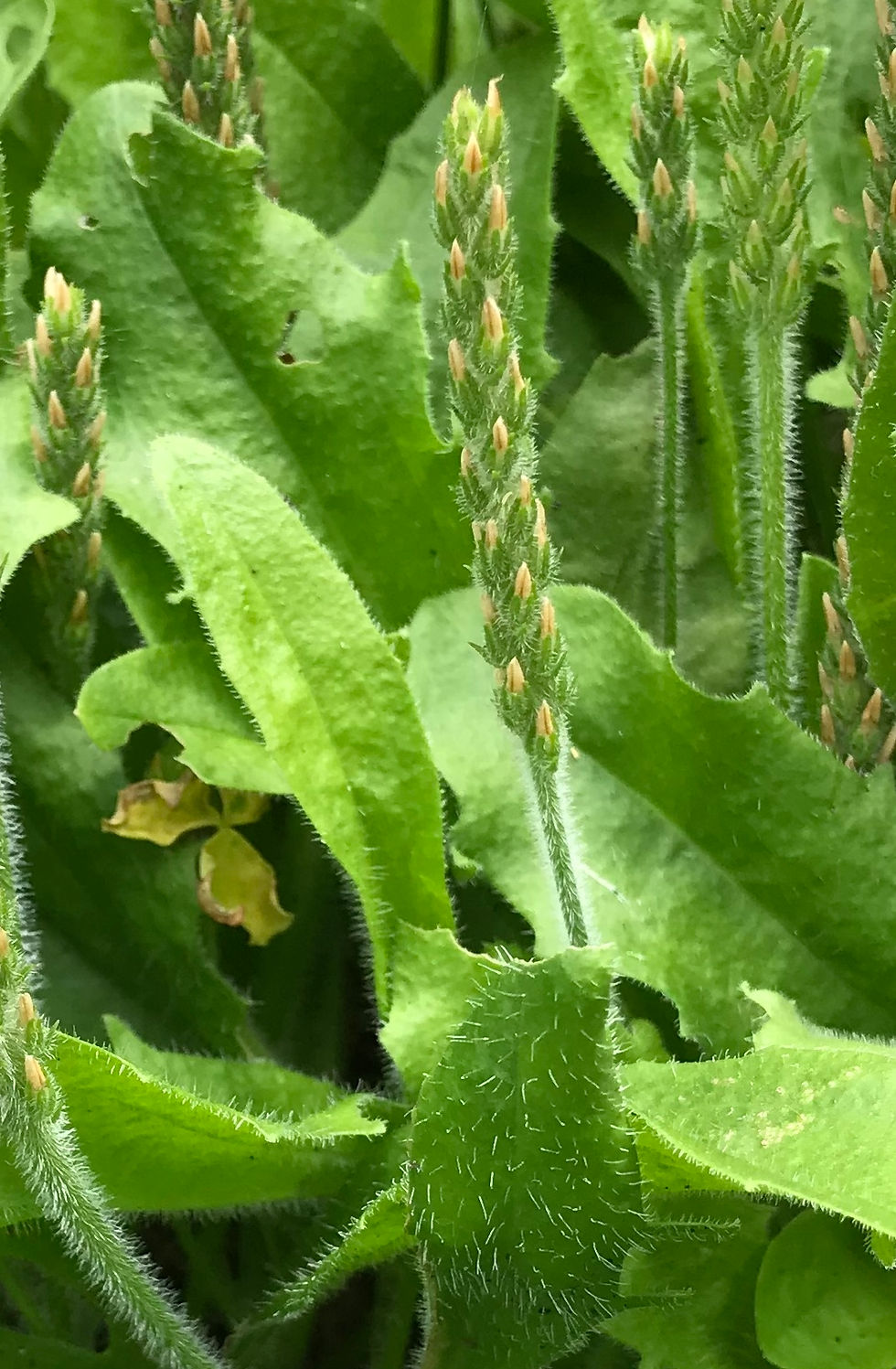
Redseed plantain is an anemophily: the tiny flowers are adapted for wind pollination rather than insects. The plants self-pollinate, a process where pollen from the same plant fertilizes its own flowers; a reproductive strategy that ensures seed production even in the absence of pollinators. Each flower produces two seeds that are bright red to reddish black in color. As indicated by its name, the seeds identify this species. One plant produces hundreds of tiny seeds.


If you find the plants annoying, they are easily removed because of the short taproot. But consider keeping it. As it is an annual plant, it will disappear before the year is out.
Redseed plantain’s high protein content is excellent forage value for livestock and wildlife especially in periods after drought.
The seeds are known to be consumed by game birds, such as bobwhite quail and mourning doves. Insects also eat the seeds. The foliage is eaten by bobwhite quail, Rio Grande wild turkeys, white-tailed deer, cattle and the Texas tortoise.
In addition, the plants are important in erosion control in many types of conservation plantings, such as stream-side buffers and filter strips and used in range and wildlife habitat restoration. The seed is used in seeding mixes to increase restoration biodiversity and as a native component to compete with exotic grasses.
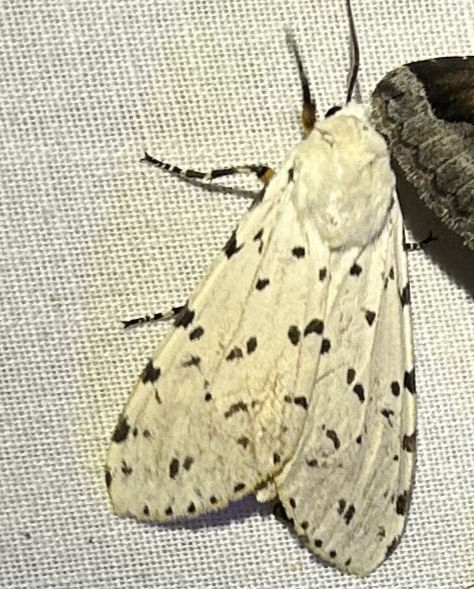
It is a larval plant for the common buckeye butterfly and a critical larval host plant for various tiger moths, such as the salt marsh moth and giant leopard moth.
“Like sunflowers, redseed plantain, and similar Plantago species, act as phytoremediators, capable of extracting heavy metals from contaminated soil. While not as large as sunflowers, plantain is a hard pioneer species that thrives in disturbed, compacted and poor-quality soil, helping to improve soil structure and stabilize contaminants.” Source: ScienceDirect.com
Once you get to know them, plantains are more charming than annoying!
Hooray for superheroes and super species!


