


Anita’s Blog – A White Garden
Updated: Apr 11

A popular term is moon garden.
Call it what you like: moon, twilight, nocturnal, white garden. The purpose is to attract night-flying insects.
A moon garden is a specifically designed outdoor space meant to be enjoyed after the sun goes down. It’s more human-centric. And that’s fine because a lot of interesting things happen at night that shouldn’t be missed by staying indoors.
I’m going to stick to the title, White Garden because this article is more bug-centric and it's all about white-blooming native plants. No doubt about it, though, I do recommend investigating what goes on after the sun goes down.
The easiest and quickest way to observe an interesting aspect of night activity is outlined in South Texas Border Chapter Texas Mater Naturalist Webmaster Joseph Connors’ Mothing Tutorial: https://www.stbctmn.org/post/mothing. This is a great summer activity if you’re looking for something to do while waiting for your white garden to establish. Fun summer night activity is not just about moths, as explained in a blog post you might like: https://www.stbctmn.org/post/anita-s-blog-gardening-for-bats
If you want to quickly experience a peaceful small moon garden, plant one sacred datura, soon, close to the edge of a quiet patio near where your seating area is. Scroll down to Plants section, second plant described, and save reading the rest of this blog post for later.
The White Garden
White flowers are highly visible at night because they reflect moonlight and attract nocturnal pollinators that use low-light vision, like moths, such as sphinx, hawk, luna, owlet, loopers, armyworm and many more moths. Typical sphinx moths you can count on seeing in the Rio Grande Valley, include white-lined, titan, banded, rustic, vine, ello, pluto, tersa, Carolina and about a handful of others, featured in one of my Mothing PowerPoints. Beetles, like scarab, June and darkling beetles are night-flying pollinators. Firefly beetles visit flowers at night for nectar, inadvertently aiding pollination. Some nocturnal sweat bees and stingless bees forage at night.
A number of white-blooming plants begin opening as the sun goes down and close before daylight, like Berlandier’s trumpet vine and low-growing shrub-like sacred datura. Some flowers release their sweet, fragrant scent only at night for nocturnal pollinators, like the two just mentioned and jasmine plants. Jasmine species are not native, although they attract native moths like palpitas and they have an amazing fragrance that needs to be experienced.
Many plants keep their white flowers open during the night, like many of the shrubs listed below.
I like to mention how plants benefit wildlife in order to further an appreciation of them. Many native plants are valuable on the range to bobwhite quail, mourning doves and Rio Grande turkeys. Coyotes, white-tailed deer and cattle forage, which means they eat vegetation and/or berries. Planting such mammal attractive plants in a home garden doesn’t mean that wildlife will start coming to your home like the daytime pollinators for which you’ve built your garden. (But you never know . . . , like infrequent quail, turkey and coyote pictured below. (Photos by Anita Westervelt)
My favorite reference sources are listed at the end of this blog post.
Quick list of plants discussed below.
Trees
Texas Ebony, Chloroleucon ebano.
Anacua, Ehretia anacua.
Coma, Sideroxylon celastrinum.
Wild Olive, Cordia boissieri. AKA anacahuita.
Potato tree, Solanumn erianthum.
Shrubs
Berlandier’s fiddlewood, Citharexylum berlandieri
Texas Kidneywood, Eysenhardtia texana.
Sierra Madre Torchwood, Amyris madrensis.
Whitebrush, Aloysia gratissima.
Texas Torchwood, Amyris texana.
Plants
Frostweed, Verbesina microptera.
Sacred Datura, Datura wrightii.
Velvet lantana, Lantana velutina.
Nicotiana, or fiddleleaf tobacco, Nicotiana repanda.
White plumbago, or leadwort, plumbago scandens.
Native crotons.
Heliotrope, Heliotropium angiospermum.
Zizotes milkweed, Asclepias oenotheroides.
Coastal germander, Teucrium cubense.
Berlandier’s trumpets, Acleisanthes obtuse.
Texas Frogfruit, also called turkey tangle frogfruit, Phyla nodiflora.
Whether you want to experience the glow and sweet, heady scent of a low light garden at night and the activity it creates, or let nature happen without you, following are white-blooming native plants listed in order of height (descending). Any of which can be planted to form a white garden or added to existing pollinator gardens. I’ve included a few insect-attracting trees because you may already have the beginnings of white blooming natives in your yard.
List of white-blooming native plants by height
Trees
Texas Ebony, Chloroleucon ebano. Can grow to 40 plus feet tall; trunk to 2 feet in diameter. Dense thorny branches. Larval host to large orange and white angled sulphur butterflies, and cassius blue and coyote cloudywing butterflies. Host to Black Witch Moth and the critically imperiled Blanchard’s Royal Moth, Syssphinx blanchardi.
Ebony is the preferred host for the rare native epiphyte, Bailey’s ball moss, Tillandsia baileyi. Javelina and white-tailed deer and birds are known to eat ebony seeds. Creamy white, fragrant flowers attract native bees, butterflies and other pollinators. Nesting sites for white-winged and mourning dove and chachalacas.
Below from left, fruit on the Texas ebony tree, female and male Blanchard's royal moth. (Photos by Anita Westervelt)
Anacua, Ehretia anacua. 40 plus feet tall. Anacua is the exclusive host to the fun and interesting Anacua tortoise beetle. Both larvae and adults feed on the leaves. Anacua flowers are attractive to honey bees, butterflies and other pollinators. The fruit is a significant food source for many birds, including parrots, mockingbirds and green jays. Small mammals eat the fruit, like armadillos, foxes, raccoons, skunks. The tree’s dense, thick canopy provides shelter and nesting for numerous birds, especially doves.
Below, left, an Anacua tree fully in bloom, teaming with butterflies; center, anacua tortoise beetle; and at right, anacua tortoise beetle larvae. (Photos by Anita Westervelt)
Coma, Sideroxylon celastrinum. Height 10-30 feet but usually less. Has spines, but attractive growth design, leaves and fruit. It won’t disappoint. Blooms have strong fragrance; it blooms May to November. Attracts butterflies and other nectar insects. Ripe fruit is purple/black; attracts birds. In the Sapotaceae (Sapodilla) Family; also called saffron-plum.

Wild Olive, Cordia boissieri. AKA anacahuita. Can grow to 15-20 feet tall with 15-foot spread. Flowers attract sphinx moths and hawkmoths to nectar at night and nocturnal stick insects (phasmids), walking sticks; butterflies, bees, hummingbirds, long-legged flies, leaf-footed bugs and wild olive tortoise beetles during the day. Birds, rodents and small mammals, like coyotes and armadillos, eat the fruit.
Top row from left: fully blooming wild olive tree, blooms, white angled sulphur butterfly on wild olive bloom.
Bottom row from left, wild olive tortoise beetle and frass, a growing larvae, and fresh larvae. (Photos by Anita Westervelt)
Potato tree, Solanumn erianthum. Really fast growing. 12 feet tall, often shorter, and quite a large spread, even to 12 or more feet. Limbs are brittle and can be broken off easily to quickly prune or shape the tree. Kinder to the tree is to use loppers. It is a member of the nightshade family. It is not edible for humans but can be one of the more entertaining additions to any garden. In a perfect growth, it can look like a giant umbrella. It can support understory and shade-loving plants, like white-blooming pigeon berry, Rivina humilis.
Potato tree flowers will probably be blooming all year. They are not a very good nectar source, but the resulting fruit is invaluable to wildlife. Flowers are white and small; they look like tomato plant flowers only a bit furry. They grow in clusters at branch tips and evolve into a large colorful array of drupes. Chachalacas eat the leaves and fruit; a lot of other birds and critters also eat the fruit. The fruit, amazingly, is a nectar source for tawny and hackberry emperor butterflies.

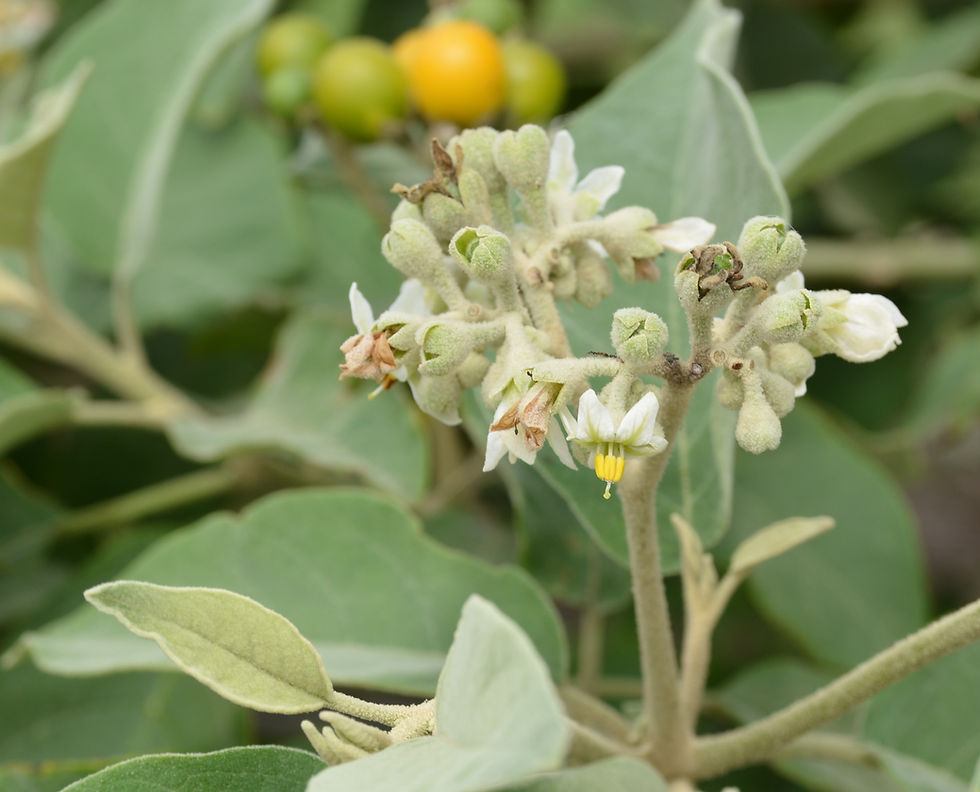
The tree is a host plant to the attractive white-spotted Arvelius stink bugs. The stink bugs don’t last long; they are excellent food for lizards and birds. Potato tree is a larval host to the potato tree borer moth, which isn’t a good thing, but caterpillars feed birds. Flies, wasps, ants, bees and other bugs use the leaves as resting places and also get a little drunk on the ripening fruit that cracks open as it ripens. The fruit clusters, like perfectly round grapes, turn from green to various shades of yellow to orange when mature. The tree is larval host to the creamy stripe-streak butterfly that may not be found as far north as the Rio Grande Valley. The tree itself is not successful north of the Rio Grande Valley.
Below from left, Pretty white-spotted Arvelius stink bugs, maturing and larvae breaking out from their egg cases. (Photos by Anita Westervelt)
Shrubs
Berlandier’s fiddlewood, Citharexylum berlandieri. 8-20 feet tall; 6- to 16-foot spread. Multi-trunked, fast-growing, thorn-free. Flowers attract bees, butterflies and other pollinators; larval host to common buckeye, long-tailed skippers and Reakirt’s blue butterflies. Larval host to Fiddlewood leafroller moths, Epicorsia oedipodalis, that can temporarily defoliate the plant; shrub typically recovers. A larval host to tiger moths. Birds eat the berries. Dense shrub provides shelter for birds. Shelters butterflies at night and night-flying insects during the day. This shrub flowers and berries at the same time nearly all year. It can be heavily pruned, even to the ground and come back thriving.


Texas kidneywood, Eysenhardtia texana. To 13 feet tall, airy, upright growth. Fragrant flowers at branch tips. Spring to fall blooming. Excellent nectar for bees and butterflies. A host plant to southern dogface butterfly (as is Dalea scandens a host). Provides high protein browse for deer. Fruit feeds birds, coyotes, racoons, opossums and rodents.

Sierra Madre torchwood, Amyris madrensis. Can grow to 10 feet tall with a 6-foot girth. Torchwoods are in the Rutaceae Family, (Citrus). Larval host to giant swallowtail butterflies. Supports a wide range of nectaring pollinators, like bees, hummingbirds and butterflies; Small black berries are eaten by thrushes, thrashers, kiskadees and other songbirds; rodents, such as mice and rats eat the fruit and foliage; lizards and other small vertebrates eat the fruit.
Whitebrush, Aloysia gratissima. 6-10 feet tall, upright growth. Renowned for its intensely sweet, vanilla-scented fragrance; a premier nectar source for butterflies and bees; masses of tiny white flowers bloom at branch tips spring through fall. Flowers stay open at night, providing nectar for moths. Seeds are eaten by seed-eating birds. It is a host plant for the Lyside Sulphur butterfly.
Texas torchwood, Amyris texana. Rutaceae family, (Citrus family) 3-6 feet tall with an upright, slender growth. Southern Texas is northern range. Attracts evening pollinators, like hawk moths. Larval host to giant swallowtail and black swallowtail butterflies. Attracts bees, butterflies, moths, hummingbirds and other pollinators; dark purple fruit when ripe is consumed by birds and lizards and other wildlife.

Plants
Frostweed, Verbesina microptera. 3-6 feet tall. AKA Texas crownbeard. Blooms late summer into winter. Clusters of flat-topped flower heads. Larval host to bordered patch butterflies; nectar for bees, butterflies, beneficial wasps, moths and a lot of interesting other insects. Birds eat seeds in winter. White-tailed deer eat the leaves and stems. An annual; cut spent plants to ground in late winter. Plant reseeds and also propagates via underground rhizomes.
Sacred Datura, Datura wrightii. 4-ish feet tall. If you have room for only one summer plant, this annual plant is the one you want in your white garden. Self-supporting but sprawling (see intro photo above); grows from a single stem but grows shrub-like and can reach 5 to 6 feet wide. Grows and begins blooming fairly quickly. Full sun or partial shade.

Beautiful, large cone-shaped flowers open in afternoon and close the following morning. Long bloom period, spring into winter; fragrant flowers, rich in nectar. Larval host for Carolina sphinx moth, pink-spotted and five-spotted hawkmoths. Pollinated by sphinx and hummingbird moths. Attracts large and interesting insects both day and night and harbors a variety of insects through the night. One morning, just before sunrise, I photographed 23 moths and bugs on a sacred datura plant. Another morning, I found 12 different moths and bugs, a Carolina sphinx caterpillar, and a little pile of insect eggs of some sort.
Velvet lantana, Lantana velutina. Can grow to 6 feet, but generally 3 to 4 feet tall. Dense shrub. Prized as a nectar source for pollinators. Has a long bloom time, February into December. Rich nectar and fragrant flowers attract bees and butterflies. Mature purple/black berries attract birds and small mammals. While some lantanas are larval hosts, velvet lantana is more active as a nectar source for butterflies, including monarchs and hummingbirds.
Nicotiana, or fiddleleaf tobacco, Nicotiana repanda. Possibly as tall as 4 feet, but mostly 1 to 3 feet. An interesting native tobacco plant that will most likely have to come up on its own. It starts out as a large basal rosette with big, fiddle-shaped leaves. A wimpy looking but apparently strong flower stalk shoots up, and then the whole plant just takes off, popping out tiny white tubular flowers which branch out all over the plant. Attracts hummingbirds and various nocturnal pollinators, like Carolina sphinx and five-spotted hawkmoths. It is in the Solanaceae (nightshade family) and is not typically eaten by herbivores. Tobacco budworm moth caterpillars feed on the buds, petals and developing seed pods. It has been identified as a host plant for the American lady butterfly.

White plumbago, or leadwort, plumbago scandens. Maybe 18 - 24 inches tall before it sprawls – with stems to 40 inches. (Blue plumbago, Plumbago auriculata, is not native.) White plumbago blooms spring to fall; has glandular calyxs, and the flower and seed areas are very tacky, so you might want this off the beaten path; seeds stick to fur of animals passing by and to human clothing which helps with seed dispersal. Excellent nectar plant for butterflies, honeybees, native bees and hummingbird moths. Larval host to cassius blue and marine blue butterflies. Larvae of Southern emerald and mournful sphinx moths have been documented feeding on the plants; White-lined sphinx moths visit the blooms at dusk for nectar.


Native crotons. 2 to 4 feet tall. Airy small shrub-like growth. Produce abundant seeds. Crotons are members of the spurge family, Euphorbiaceae. Approximately 20 native species in Texas. Typically have silvery-green or grayish-green foliage and small white or greenish-white flowers. Many are collectively known as doveweed because their oil-rich seeds are a vital food source for doves, quail and other birds. Because many garden moths are generalists, they may deposit eggs on crotons, if their preferred native hosts are unavailable, but as such, they are larval host plants to some butterflies but not to moths.

Crotons’ main claim to fame is that they attract butterflies for nectar. A few are larval plants: goatweed leafwing butterfly feeds on crotons, often called goatweeds, including Croton capitatus; saltmarsh moth, Croton monanthogynus, Croton texensis, Croton alabamensis; gray hairstreak uses Croton californicus.
· Texabama Croton, Croton alabamensis, var. texensis
· California Croton, Croton californicus
· Woolly Croton, Croton capitatus, aka hogwort or doveweed
· Mexican Croton, Croton cilitoglandulifer
· Cortes Croton, Croton cortesianus – dioecious – need both male and female for fruit
· Bush croton, Croton fruticulosus
· Low Croton, Croton humilis
· Torrey’s Croton, Croton incanus – dioecious
· Threeseed Croton, Croton lindheimerianus
· Prairie Tea Croton, Croton monanthogynus, aka one-seeded
· Beach Croton, Croton punctatus
· Texas Croton, Croton texensis – dioecious
Heliotrope, Heliotropium angiospermum. Short and shrubby, to about 18 to 24 inches tall. A key native nectar plant in the Rio Grande Valley, renowned for attracting a wide diversity of butterflies to its non-fragrant but excellent nectar-rich flowers, from tiny cassius blue, to skippers to ruddy daggerwings, white peacocks, zebra heliconias to giant swallowtails. The shrub’s dense mass is ideal habitat for night-flying insects, leaf-footer bugs and others to rest during the day, which in turn brings spiders, lizards, snakes and birds to prey.
Zizotes milkweed, Asclepias oenotheroides. Can grow 1 to 2 or 3 feet in height. I rarely find them much taller than 18 inches. It is a perennial in that it is a warm-season plant and grows back from its tuberous root system year after year and also deciduous, its aboveground growth dies back to the ground after seed dispersal and remains dormant through the winter. This milkweed is a critical food in its range (which includes the Rio Grande Valley and from Louisiana, Oklahoma, New Mexico, Texas, and into Central America) to feed monarch, queen and soldier butterfly caterpillars. Sources also mention that it is the easiest milkweed to grow from seed. I try to collect seeds as I was taught by native plant expert Christina Mild: tie little net bags around the big seed pod before it ripens and splits open. (Bags are cheapest from Amazon in bulk and also available at DollarTree in the wedding section.)
Zizotes are also larval hosts to milkweed tussock moths, dogbane tiger moths and various beetles. The sap can be overtaken by milkweed aphids that in turn attract large milkweed beetles, milkweed assassin bugs and beneficial predators like ladybeetles, parasitic wasps, assassin bugs and spiders.
Zizotes is a valuable nectar source for adult tarantula hawk wasps, which makes those wasps effective pollinators of the milkweed. Don’t stop reading, this gets fun.

In September of 2015, about seven Rio Grande Valley Chapter Texas Master Naturalists designed and planted a specialty zizotes garden in Harlingen’s Hugh Ramsey Nature Park, off the lower trail through Ebony Loop, up a small incline from the Arroya Colorado and at the corner of the earliest built bird blind (which we cleaned out and renovated). The project had an interesting visitor: Read about it at the following link and be sure to look into the links in the blog post, especially the second link. (No Texas Master Naturalists were harmed.) https://legacyblog.stbctmn.org/2015/09/18/anitas-blog-interesting-visitor-to-zizotes-garden/
Coastal germander, Teucrium cubense. 6 to 28 inches in height. White blooms (another species has pinkish/lavender flowers: American germander, Teucrium canadense). Coastal germander, a perennial, is a primary source for consistent nectar because it blooms nearly all year, attracting bees and butterflies. It is in the mint family and although it may be a larval food source in areas of its range, like mint-loving Pyrausta moths in South Texas, its claim to fame in a garden is for producing excellent nectar, but the flowers do not have a strong fragrance. The foliage may be more aromatic than the blooms. Still, dense enough growth to hide night-flying insects during the day.
Berlandier’s trumpets, Acleisanthes obtuse. Prostrate to climbing perennial vine that can travel up tree trunks or sprawl vine-like on the ground. Prolific even though you’ll be hard-pressed to ever see its seeds, it comes up where it wants, possibly spread by mammals passing by, maybe via wind, bugs travelling around redistributing seeds, who knows?! It grows in sandy to clay soils and can be found growing in the cracks of sidewalks and driveways and along pavement edges.
Berlandier’s trumpets bloom spring to winter. At four o’clock every evening, the prolific blooms faithfully open and stay open all night, releasing a sweet, heavy scent, closing after sunrise the next morning. In the early morning sun, the pink anthers look like pink polka dots on the satiny white bloom petals. In the eerie light of misty morning, the blooms remain open with a vibrancy that appears to glow. It is a larval host plant for white-lined Sphinx moths. Nectar is rated only as good. Blooms attract hummingbird moths and other night-flying pollinators. On the range, white-tailed deer eat the leaves, as do cottontail rabbits.

Texas frogfruit, also called turkey tangle frogfruit, Phyla nodiflora. Possibly as tall as 6 inches for the bloom stalks; leaves are closer to the ground. Frogfruit is often touted as a groundcover, but be forewarned, grass and other errant plants are not deterred from popping up through it; weeding will be necessary. Tiny white flowers have purple centers. It is a larval host for phaon crescent, white peacock and common buckeye butterflies. Its powerful nectar attracts small butterflies like skippers, crescents, checkerspots, hairstreaks and blues and these really good looking poecilanthrax lucifer bee flies, wasps, bees and other pollinators and small moths, like Hawaiian beet webworm moth. Leaves stay green all year. On the range, white-tailed deer and javelinas eat the leaves.
Below from left, short stalks of tiny Texas frogfruit, a charming poecilanthrax lucifer bee fly (it's a fly not a bee, really) and a pretty spotted Hawaiian beet webworm moth. (Photos by Anita Westervelt)
Interestingly, mice, ants, grasshoppers, cockroaches, beetles and other unlikely critters play roles in nocturnal pollination; as they seek nectar and move between flowers, they carry pollen on their bodies.
Bravo Zulu to you if you've read this far!
Native plant information sources I use:
Richardson, A., King, K. 2011. Plants of Deep South Texas: A Field Guide to the Woody and Flowering Species. Texas A&M University Press, College Station.
Everitt, J.H., Drawe, D. L., Lonard, R.I. 1999. Field Guide to the Broad-Leaved Herbaceous Plants of South Texas Used by Livestock and Wildlife. Texas Tech University Press.
Glassberg, Jeffrey, 2012. A Swift Guide to Butterflies of North America. Cornell Lab Publishing Group.
Weber, J, Weber L. 2022. Native Host Plants for Texas Moths A Field Guide. Texas A&M University Press, College Station.
https://agrilifeextension.tamu.edu/ Research-based information and sustainable solutions created to improve the well-being of the land, people and animals across the State of Texas
www.iNaturalist.org Joint initiative California Academy of Sciences and National Geographic Society worldwide nature identification
www.wildflower.org Lady Bird Johnson Wildflower Center, Austin, Texas


